Gamified collectible experience
Gamified loyalty programs

Introduction
Power.xyz is developing a platform allowing big brands to create engaging experiences. As we develop the platform, we also develop a software development kit (SDK) to facilitate the front development of the engaging experiences created via the platform.
This SDK makes multiple basic components available for the front developer so he or she doesn't have to re develop everything from scratch every time they build an engaging experience.
Company and design goals 🎯
The company goal was to make a tool available for brands to make their engaging experience creation easier. This tool had to be easily adjusted to any type of brand image because power.xyz works with very different types of brands, from luxury brands like Maje, Vanessa Bruno or Le Bristol to historic brands like Michelin.
As a designer I had to define the structure of a basic experience and make sure it was easily adjustable for any business case. While doing so, I also had to make sure the userflows were well defined and easy to understand.
Experience structure definition
One of the steps of design thinking (after the exploring step) is to define what we are going to design and make sure the first definition is adjustable to all our main use cases.
First, we have to ask ourselves: what is an engaging experience? An engaging experience is an enhanced gamified loyalty program that allows brands to interact in a new way with their audiences but also a tool for brands to reach their business goals.
More precisely, an engaging experience is an event or a program, with or without an end date, organized by brands online or in the real world. While this event or program is live, their audience or users can participate by completing missions to make their profile evolve or to unblock free content.
The experiences created via our SDK are automatically linked to our platform, allowing brands to access precise analytics about their users engagement.
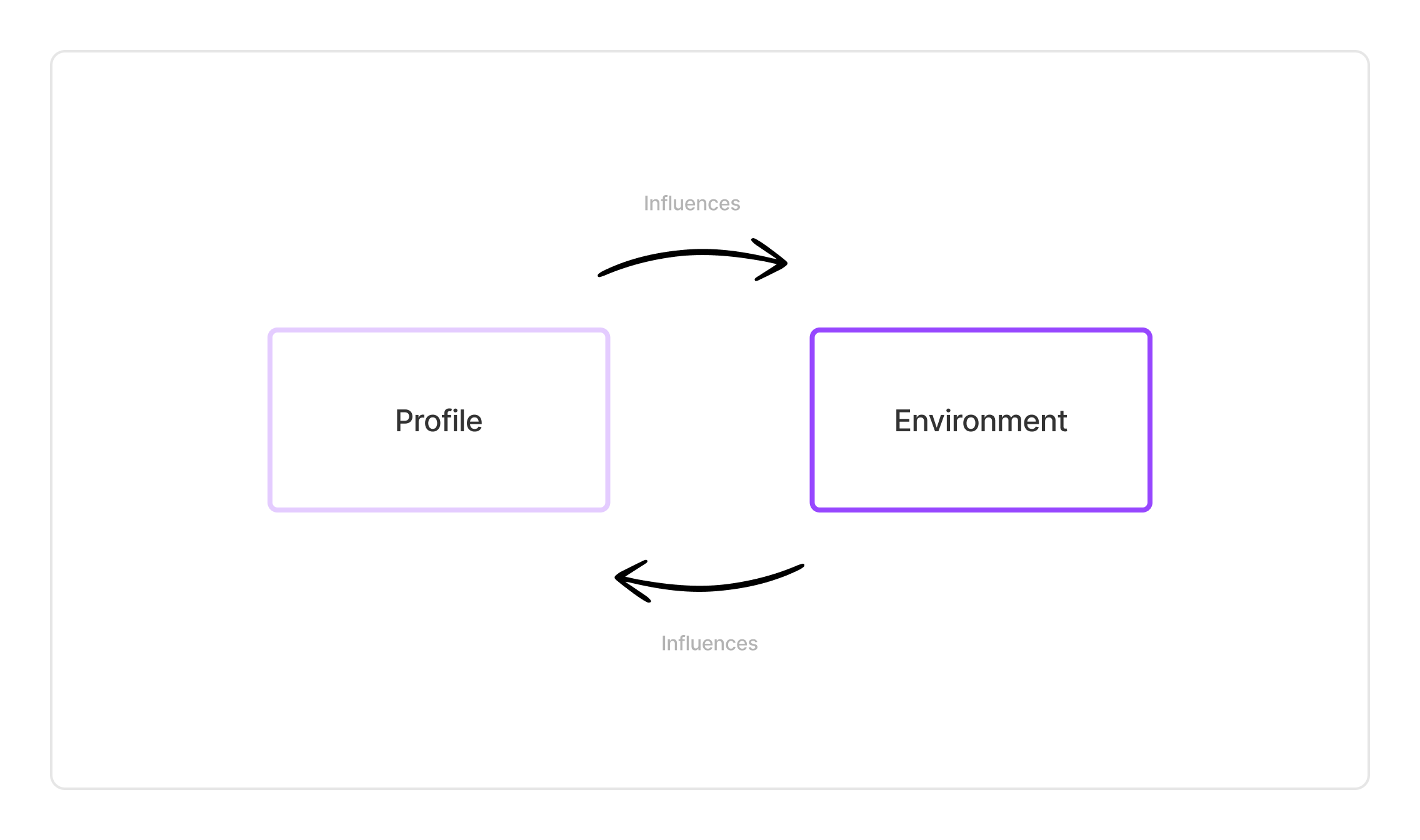
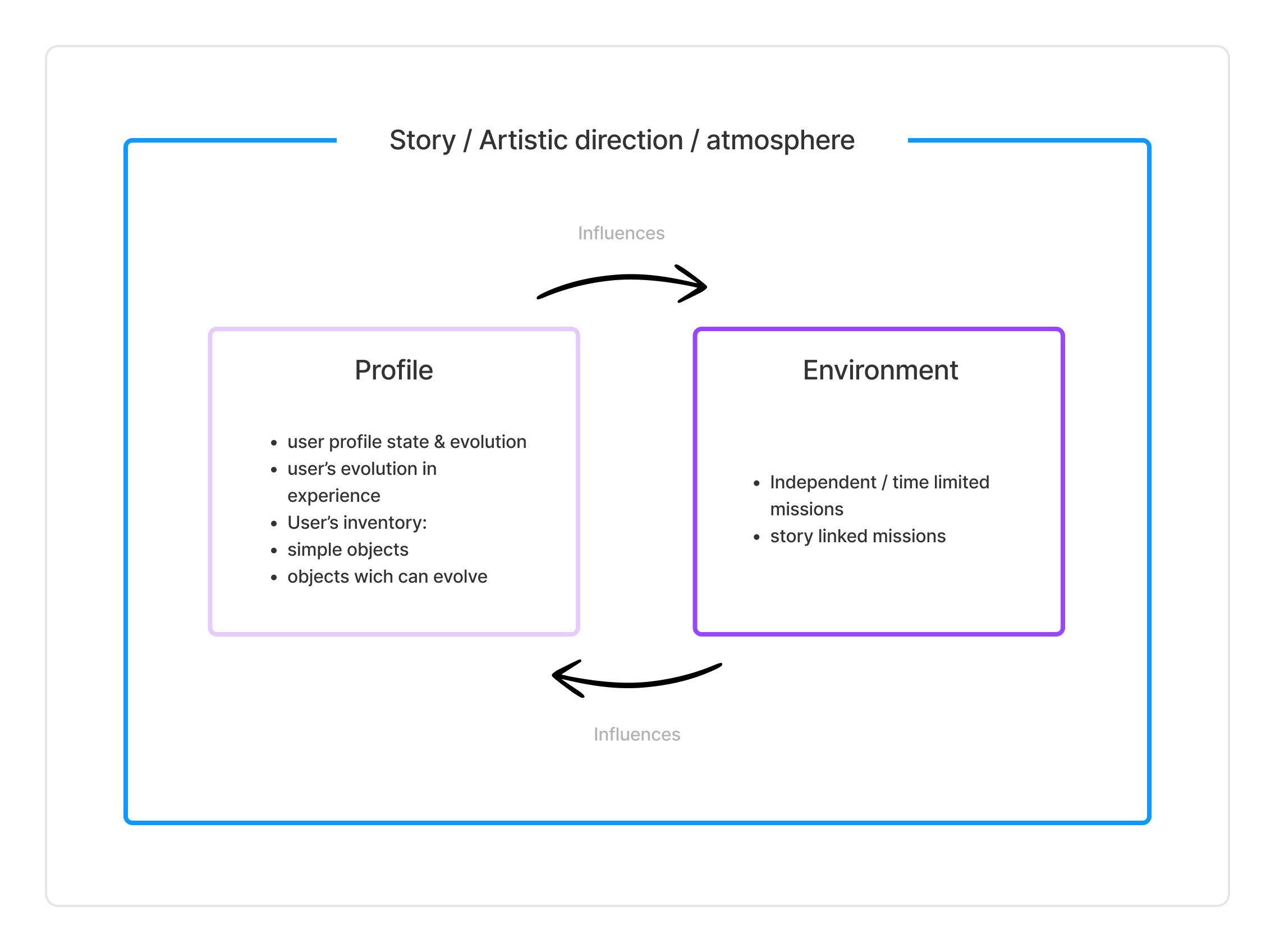
An engaging experience is composed of two main elements: the user profile and the experience environment that interact and influence one another.
Around those two elements is one the most important parts: the story and the atmosphere of the experience (the type of missions, the narrative tone, the visual branding, the characters, the big goals etc.)
Prototyping
After asking the tech team to validate the experience structure, I had all I needed to begin designing in figma and prototyping a first experience.
I began designing the main userflows:
- Signup
- Login
- Discover and navigate in the user profile
- Navigate through the missions
- Claim a collectible
- Complete a mission
At some point I also designed a dressing room, because we had a 3D miniverse experience for Maje that allowed end users to change their avatar's clothes.
User testing
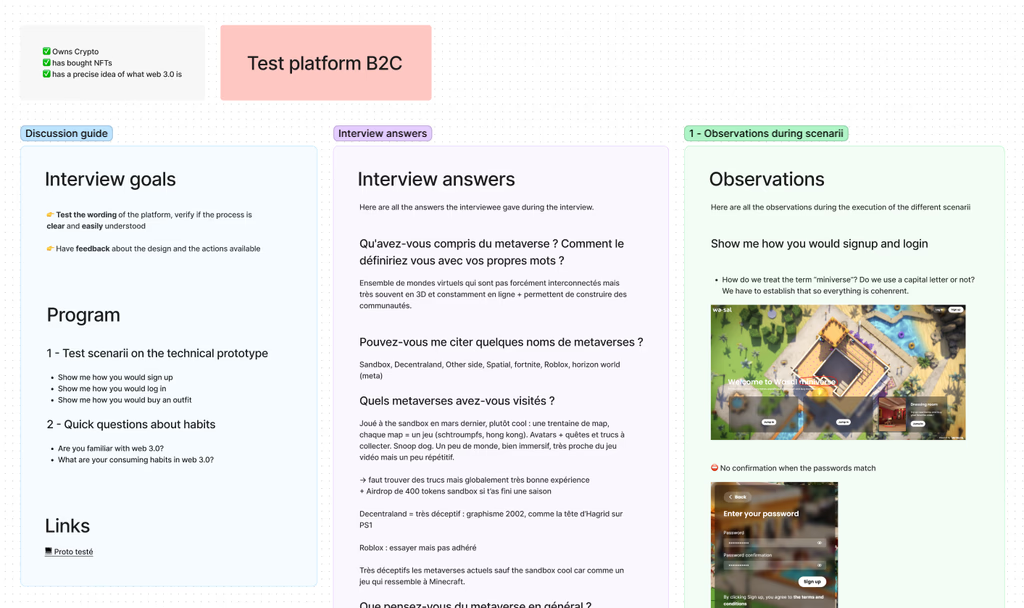
The majority of user tests were conducted internally with different team members (this allows us to have various types of profiles, more or less familiar with engaging experiences and more or less accustomed to this type of platform). Feedback was also continuously collected during conferences, client demos, and through the internal use of the platform. (An example of a transcript of user test results is provided below).
Declining the experience
Once the definition and the first prototypes were finished, we only had to use the same principle for other clients in need of similar experiences. Thanks to the SDK, the integration is quick and efficient and the front dev can use it for any type of experiences.
What makes an experience unique is the story it tells. If you think about it everything we invented is sooner or later used to tell a story (writing, cinema, video games, internet, youtube videos, websites, talking...). Human brains are very hungry for good stories and fun things to learn. That is why, if you want an experience to be remembered, you have to create an atmosphere and a compelling narrative. The platform we develop is a nice tool to build it technically but the story has to be made with great care and creativity if you want your experience to engage your audiences even more!
You can enhance your users's experience by adding challenges in your missions list. Adding enigmas, puzzles and competition is a simple and fun way to make audiences have fun!
If you are interested in creating fun experiences for humans, I would highly recommand A theory of fun by Raph Koster who explains in a simple and fun way what works and what doesn't in game design. (Because isn't an experience just a very simple game?)
I have a bit more study cases about gamified experiences I designed to show but I have to wait for them to go live.